Download Mendeley
Cryo-EM structure of TMEM164 reveals distinct phospholipid remodeling mechanisms with anti-ferroptotic potential.
Ke, M., Shan, Y., Zhai, Z., Yao, G., Guo, X., Li, X., Wu, Z., Chen, H., Zhang, M., Chen, M., Li, Y., Zhao, C., Wang, B., Tortorella, M.D., Shu, X., Zhang, M., Kuang, J., Pei, D.(2025) Nat Commun
- PubMed: 41422090
- DOI: https://doi.org/10.1038/s41467-025-67651-2
- Primary Citation of Related Structures:
9LW1 - PubMed Abstract:
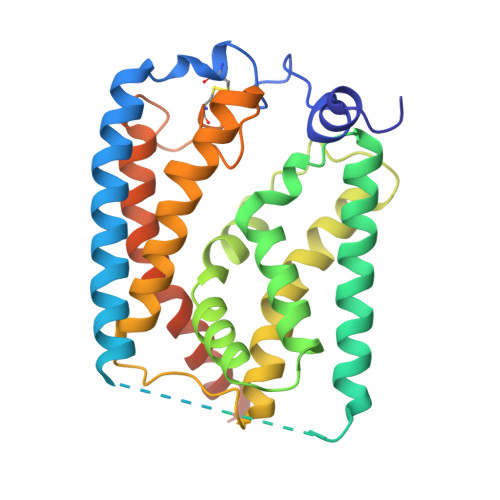
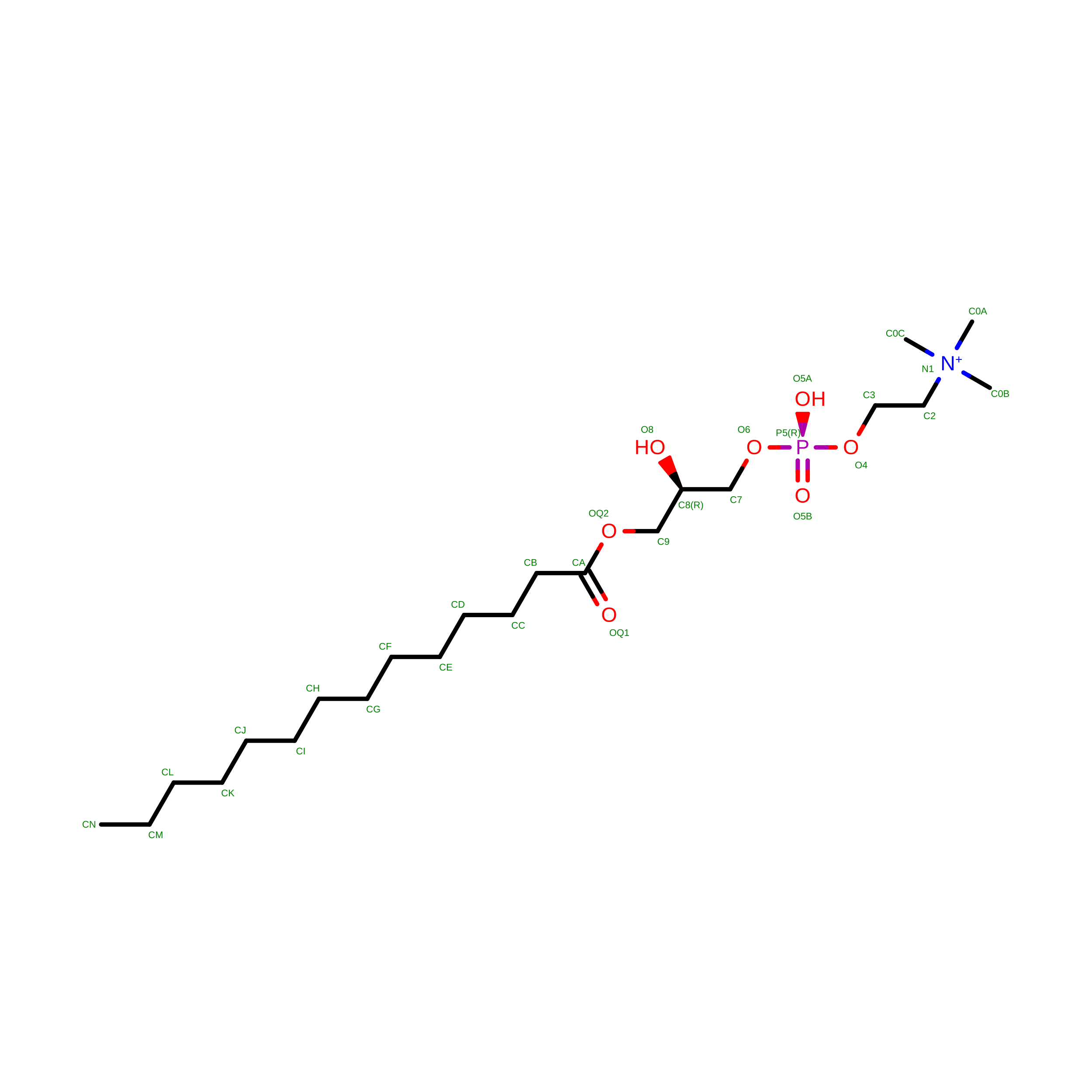
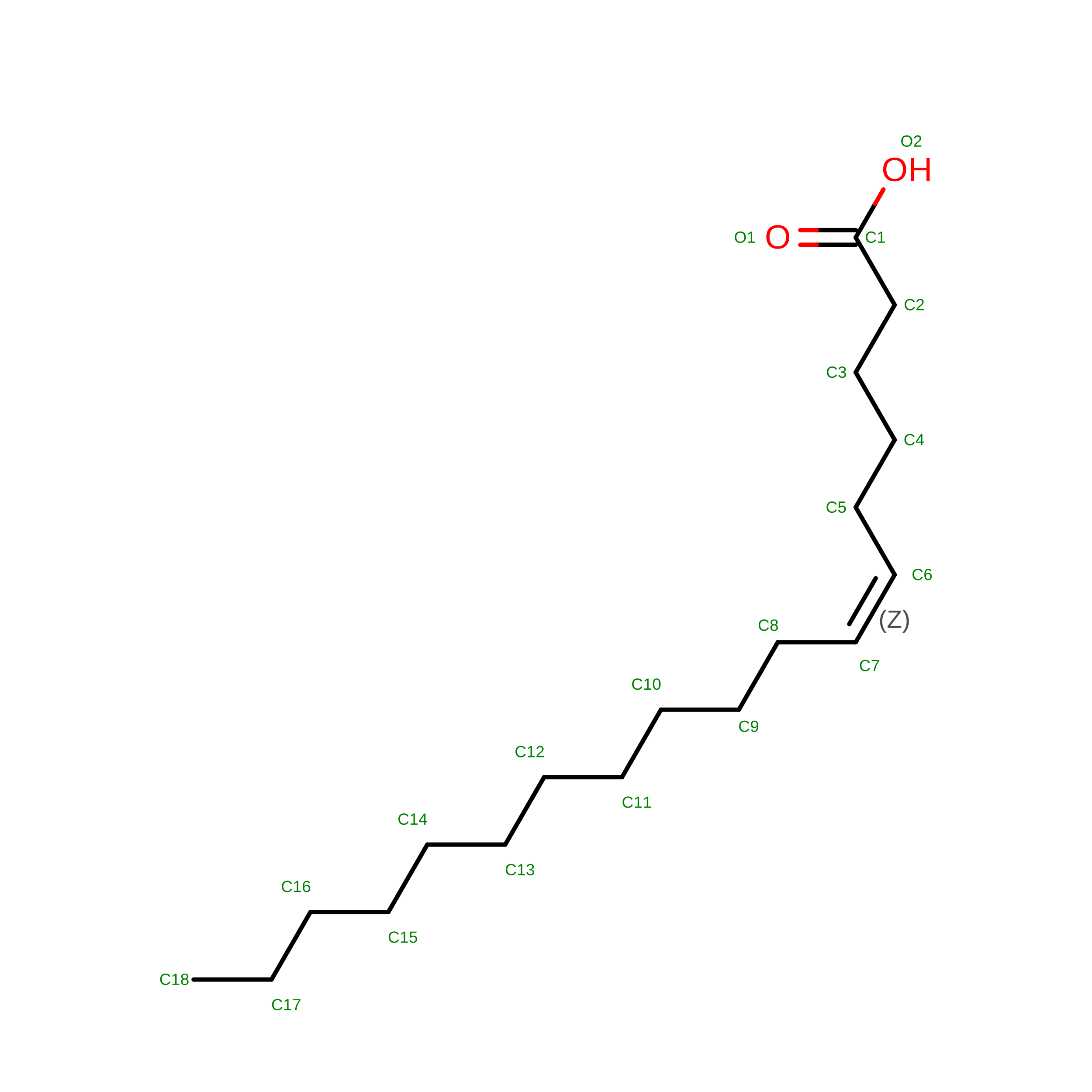
Phospholipids in cell membrane provide both regulatory and structural function of a cell. How lipid remodeling regulates cell fate remains less explored. Here we report the cryo-electron microscopy structure of TMEM164 identified by genome-wide CRISPR screen as an anti-ferroptotic factor. The overall architecture reveals a dimer of two 7 transmembrane domain monomers and a metal ion catalytic center with phospholipid substrate in a distinct polyunsaturated fatty acyl (PUFA)-C123 intermediate state. Both loss and gain of its function result in the decline of PUFA-ePE and elevation of C16/18:1-ePE, consequently confer resistance to GPX4 inhibitor RSL3 induced ferroptosis. Mutagenesis studies further validate critical residues for the catalytic center (C123) and the chelates center (E106, Y177 and H181). Through virtual screen and rational design, we identify and test candidate inhibitors for TMEM164, including activity for Montelukast S-enantiomer with 4 order of magnitude higher affinity. Our works not only demonstrates TMEM164 as a membrane lipid remodeler that controls the ferroptotic fate, but also highlights the power of integrating multi-scale platforms to unravel distinct mechanisms and functions.
- CAS Key Laboratory of Regenerative Biology, Guangzhou Institutes of Biomedicine and Health, Chinese Academy of Sciences, Guangzhou, China.
Organizational Affiliation: